

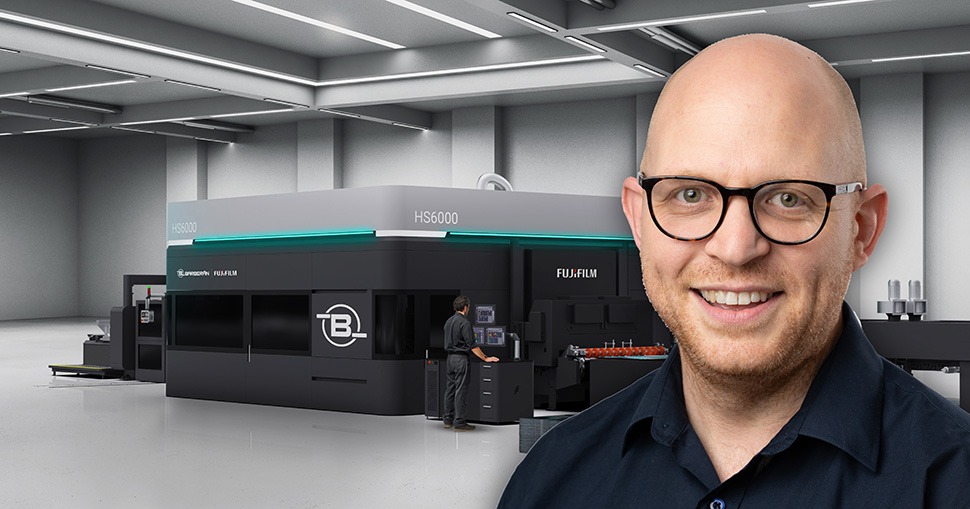
For much of the past decade, single pass printing has been defined by one metric above all others: speed. Early generation systems focused on printed resolution numbers in brochures, belt speeds on spec sheets, and headline productivity figures intended to impress at a glance. But as more single pass systems transitioned into real-world production, one fact became clear: speed is meaningless without stable, high-definition jetting from the printheads themselves.
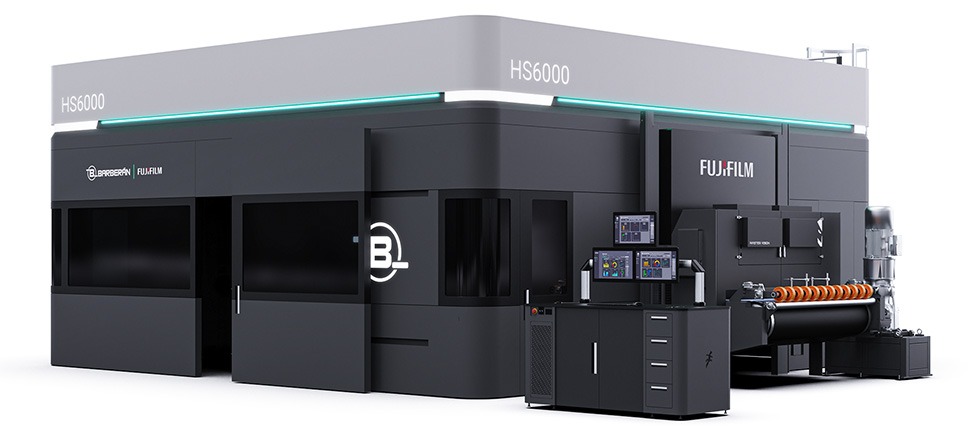
The launch of the Acuity Aristo from Barberán and Fujifilm marks a decisive shift. It represents what many in the industry are now calling a shift to second generation single pass technology, a platform built not around marketing-friendly numbers, but around the engineering fundamentals that determine print quality, consistency and sustainable high-speed performance.
At the heart of that shift is a simple but powerful message:
It’s time for customers to stop asking about printed resolution and start asking about the printhead.
Why Printhead Technology Matters More Than Printed Resolution
In most traditional literature around single pass printing, the printed resolution is quoted, but this is a number that can be manipulated simply by slowing down the belt and not referred to in regards to the printhead itself. That’s why the industry sees such wide, sometimes confusing, claims around single pass resolutions.
But in reality, the printhead defines the true capability of any single pass platform.
It determines:
1. The minimum droplet size
2. The native jetting resolution
3. The fine detail capability
4. The quality retained at higher production speeds
And unlike belt speeds or marketing-derived resolutions, the printhead specification is fixed. You cannot change it. You cannot compensate for it. You cannot print around it.
This is where many first generation systems have reached their limits. They often rely on older 14-picolitre, 360 dpi printhead architectures originally designed for multi-pass platforms. While fast, they inherently struggle with fine details when speeds increase, because the drop size and native head resolution can’t keep up with the level of definition required.
Acuity Aristo: The Second Generation Approach
Barberán and Fujifilm took a fundamentally different path.
Rather than adapting older printhead technology for faster operation, the Acuity Aristo is built around Epson industrial print heads, engineered specifically for high-speed, high-precision, single pass production:
1. 5-picolitre droplets — around one-third the size of older 14 pl architectures
2. 600 dpi native resolution — not a resolution, but the true physical characteristics of the head
3. High jetting frequency enabling stable high-speed performance
4. Operator replaceable head modules for maximum uptime because you aren’t waiting for an engineer to be onsite to replace
This single decision in the choice of printhead unlocks nearly every one of Acuity Aristo’s core advantages: the ability to handle variable data, a vibrant colour gamut and the ability of the ink to adhere to a multitude of substrates.
These advantages are ideal for an already established digital fleet of ageing equipment struggling with capacity, or a litho business looking to compliment its production by moving shorter more variable runs to digital. Critically, these qualities are maintained even when belt speeds increase, because the head has the native resolution to sustain quality at very high speeds.
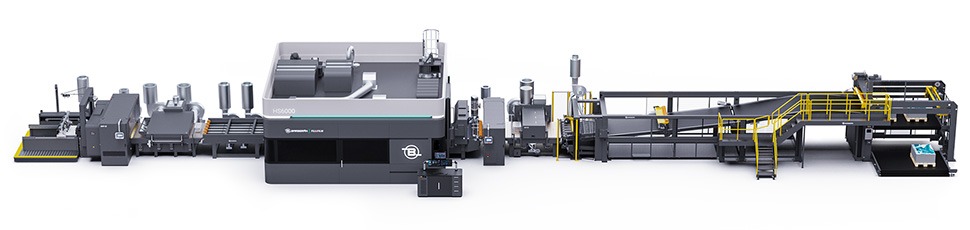
Where first generation machines often require operators to trade speed for quality, a second generation system like the Acuity Aristo removes that compromise. The 600 dpi architecture can be driven harder without trade-offs in the finished output. The Acuity Aristo maintains fidelity at belt speeds up to 1224 sheets per hour on the HS3000 and up to 2926 sheets per hour on the HS6000.
The Power of Three: Barberán, Fujifilm and Epson
The Acuity Aristo is not just the product of two companies, but three distinct technology leaders with aligned engineering cultures.
Barberán
Specialists in true industrial engineered machines, known for their philosophy of always building the best. Their systems are engineered for uptime, operator access and longevity.
Fujifilm
A global R&D powerhouse with deep inkjet chemistry expertise. Our teams’ connections with Epson in Tokyo give direct access to the knowledge needed to formulate inks designed specifically for small drop, high-frequency heads – a chemistry challenge that many in the market face.
Epson
Providing the high-resolution, industrial-grade printheads that make this second-generation approach possible. Not only do these heads deliver the critical 5 pl / 600 dpi performance, they are also designed for operator replaceability, reducing downtime dramatically. That philosophy aligns perfectly with Barberán’s commitment to giving production teams maximum autonomy and uptime.
This partnership isn’t accidental. It is the result of aligned engineering values: precision, reliability, and performance over compromise or low-cost build quality.
Shifting Customer Conversations: From Marketing Claims to Real Technology
The aim of Acuity Aristo is not just to raise the bar on performance. It’s to change the way customers evaluate single pass printers entirely.
Instead of asking:
1. What is the printed resolution?”
2. What does the brochure say at maximum quality mode?”
We urge customers to start asking:
1. What is the native resolution of the printhead?
2. What is the droplet size?
3. What resolution does the machine maintain at real production speeds?
4. How does the ink chemistry support small drop jetting?
5. How quickly and easily can heads be replaced or serviced?
These questions cut through marketing gloss and get to the engineering truth. The truth that determines image quality, operational stability and long term return on investment.
Why Second Generation Technology Matters Now
First generation single pass technology proved that digital could match analogue for speed.
Second generation single pass proves that digital can match analogue for detail, stability and cost efficiency over time, with the ability to print shorter run jobs with ease as and when required.
The Acuity Aristo embodies that shift:
1. Modern 5 pl, 600 dpi heads
2. High-speed jetting
3. Advanced pinning and curing
4. Exceptional industrial engineering
5. Ink chemistry optimised for extreme precision
Operator-driven serviceability for maximum uptime
This is the moment where single pass stops being fast digital and becomes true industrial production, with quality, reliability and consistency built into the technology rather than compensated for by the operator.
A Premium Platform for Producers Who Value Excellence
Barberán has never aimed to be the cheapest. And Fujifilm is renowned for its high value ink production with impeccable compliance and regulatory processes. The Acuity Aristo reflects that shared philosophy: a premium, industrial system for businesses that want the best technology, not the lowest price.
Customers choosing second generation single pass technology aren’t just buying a machine.
They’re buying clarity, consistency, and confidence, whilst future proofing their growing business.
Attributed to: Oliver Mills, Marketing Manager – Barberan Project, Fujifilm
FAQ about this article.
Acuity Aristo is a single pass printing platform from Barberán and Fujifilm that is positioned as part of the rise of second generation single pass technology.
Second generation single pass printing refers to systems designed around engineering fundamentals such as printhead capability, ink chemistry, stability and serviceability, rather than headline brochure claims about speed or printed resolution.
The article argues that printed resolution can be influenced by machine speed, but printhead characteristics such as droplet size and native resolution are fixed and determine the true print quality and production capability of the system.
Acuity Aristo uses Epson industrial printheads with 5 picolitre droplets, 600 dpi native resolution, high jetting frequency and operator-replaceable head modules.
The article contrasts Acuity Aristo with older first generation platforms that often use 14 picolitre, 360 dpi printhead architectures, which may struggle to maintain fine detail as production speeds increase.
The claimed benefits include improved fine detail, stable high-speed performance, variable data capability, vibrant colour gamut, broad substrate adhesion, reduced downtime and better uptime through operator-replaceable heads.
The platform combines Barberán’s industrial machine engineering, Fujifilm’s inkjet chemistry expertise and Epson’s industrial printhead technology.
The article suggests it is suited to print businesses with aging analogue or digital fleets, operations facing capacity pressure, and litho businesses looking to move shorter and more variable jobs into digital production.
The article says first generation single pass proved digital speed, while second generation single pass aims to prove that digital can also deliver detail, stability, consistency and long-term cost efficiency.
No. The article positions Acuity Aristo as a premium industrial platform for businesses that value high-end technology, reliability and long-term confidence over lowest-price purchasing.