
Digidelta, a specialist manufacturer of digital printing, decoration, visual communication, and textile materials, has set out how customers around the world are integrating its BIOND bio-based printable films into their daily production workflows – producing high-impact applications without changing equipment, processes or materials handling.
Since its unveiling last year, BIOND has had a major impact on the global print market. Developed in house by Digidelta, BIOND is a bio-based technology that represents a definitive crossover between sustainability and unparalleled printing performance, presenting users with numerous exciting opportunities within sustainable print production.
Key to the success of BIOND has been the significant flexibility of materials within the range. Each product is compatible with multiple printing technologies – including UV LED, UV gel, latex, and eco-solvent – meaning these innovative offerings fit seamlessly into existing production environments, without the need for investment in specialist equipment.
BIOND films feature a unique polymer structure, ensuring outstanding printability and dimensional stability. Materials behave in the same way as traditional PVC vinyl and can be stretched without tearing, making them suitable for a wide range of sign and graphics applications. In addition, a bubble-free adhesive system is included as standard, ensuring smooth application.
On top of this, BIOND is available in several formats – including printing films and protection films – with each range offering a selection of speciality products to suit a wide variety of applications, allowing customers to take on work across multiple markets.

Vikiallo APS, a specialist supplier and distributor of print and signage products in Denmark, is one company that can attest to both the quality of and demand for BIOND. Kim Harris, CEO of Vikiallo, said sustainability has rapidly moved from a marketing buzzword to a genuine requirement across the print market.
“Across Scandinavia – and particularly in Denmark – brand owners are actively demanding more sustainable solutions,” Harris said. “For many of the larger companies, sustainability is written into their business strategies and ESG commitments. They are already implementing more responsible solutions across areas such as media, cardboard packaging, freight optimisation, recycling and upcycling. It’s no longer just a buzzword; it’s becoming a reality of everyday business.”
“While smaller sign-makers and print providers may historically have focused less on sustainability, that is changing quickly. Their customers – especially larger brands – are asking for environmentally responsible materials, which means they are increasingly looking for alternatives they can introduce into their production.”
BIOND gains early traction in signage and print
Harris said the response to BIOND from early adopters has been highly encouraging, particularly given the material’s compatibility with existing print technologies.
“Customers have reacted very positively to BIOND,” Harris said. “They appreciate that we are among the first suppliers to focus on this type of solution, and importantly the materials print well across technologies such as eco-solvent, UV and latex. The pricing is also competitive with traditional media, which helps adoption.”
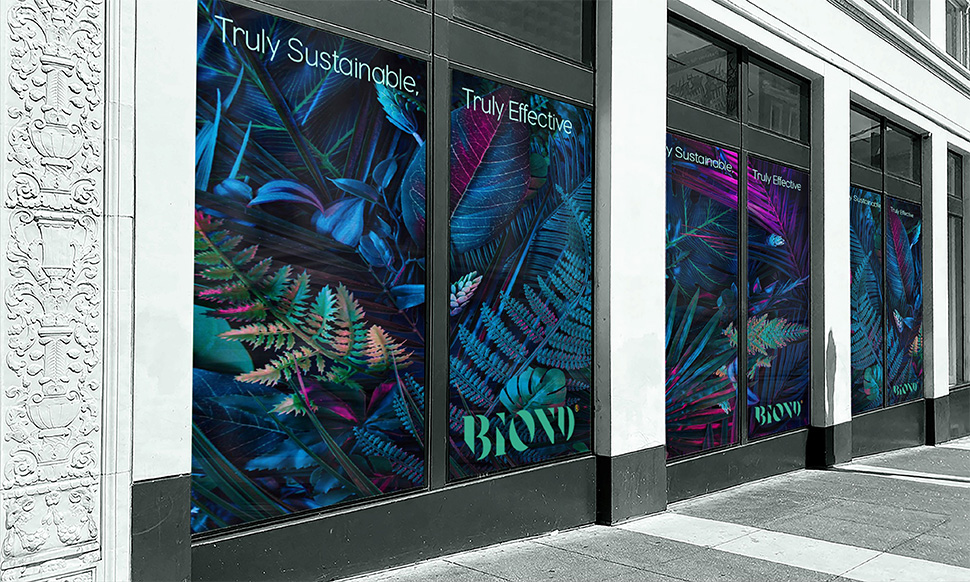
According to Harris, BIOND materials are already being used for a range of everyday applications including indoor and outdoor signage, window graphics, construction signage, floor advertising and two-dimensional vehicle decoration.

“From a practical standpoint, the products are easy to handle and become flexible with heat during application, which is important for installers,” Harris said. “As with any new material there have been some early technical adjustments, such as developing ICC profiles for specific printers, but once these are in place customers are very happy with the results.”
Looking ahead, Harris believes bio-based materials like BIOND will become increasingly important as sustainability regulations tighten and businesses look to strengthen their environmental credentials.
“Many companies want to build a greener profile, and ranges like BIOND help them achieve that,” Harris said. “Over time, we may see higher taxes or restrictions on some traditional materials such as PVC, which will accelerate the shift towards alternatives. We see BIOND as a very important product range for the future.”
Certified BIOND meets demand for sustainable print
In response to this burgeoning customer demand, the specialist team at Digidelta continues to evolve the BIOND range. Each BIOND material has between 80– 97% bio-based content created from vegetable-based products, which absorbs carbon dioxide during growth, reducing its total footprint by more than 80%. Crucially, the range has recently secured independent OK biobased certification from TÜV Austria confirming these credentials.
“We have been delighted with the early response to BIOND,” said Armando Mota, CEO of Digidelta. “Since we launched the range at FESPA 2025, we have seen many examples of customers putting the materials to use across a wide range of innovative applications.
“One of the most important aspects of BIOND is that printers can adopt it immediately within their existing production environments. They don’t need new machines, new training or new workflows – they simply switch to a more sustainable material while continuing to deliver the same high-quality applications their customers expect.”
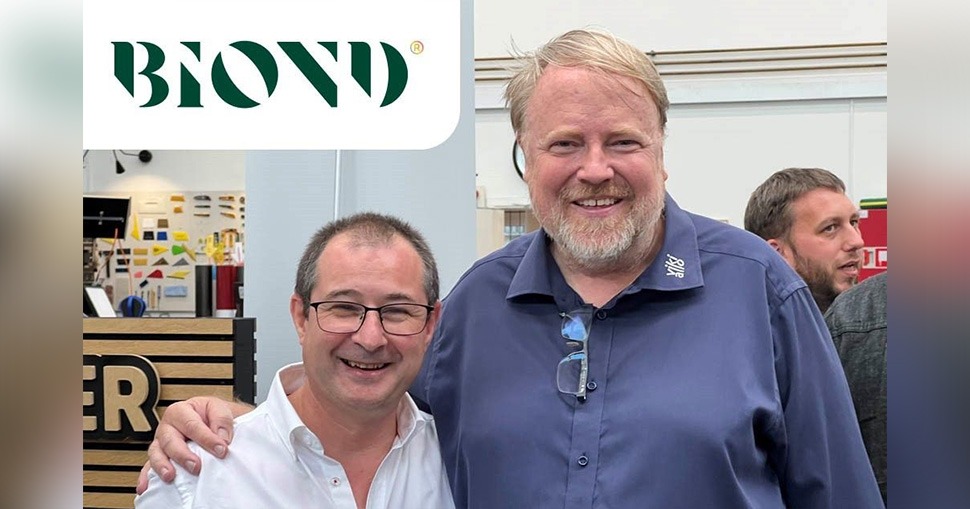
Top image shows Antonio Costa from Digidelta (L) and Kim Harris from Vikiallo (R).
To read additional recent news from Digidelta, click here