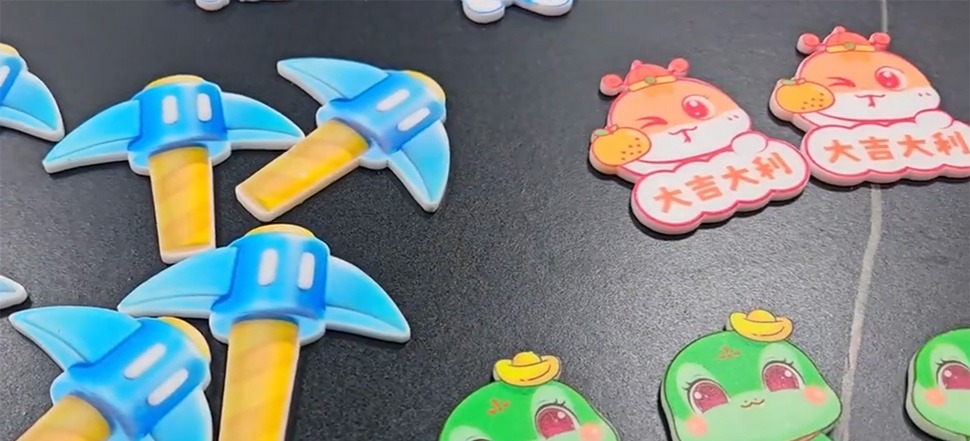

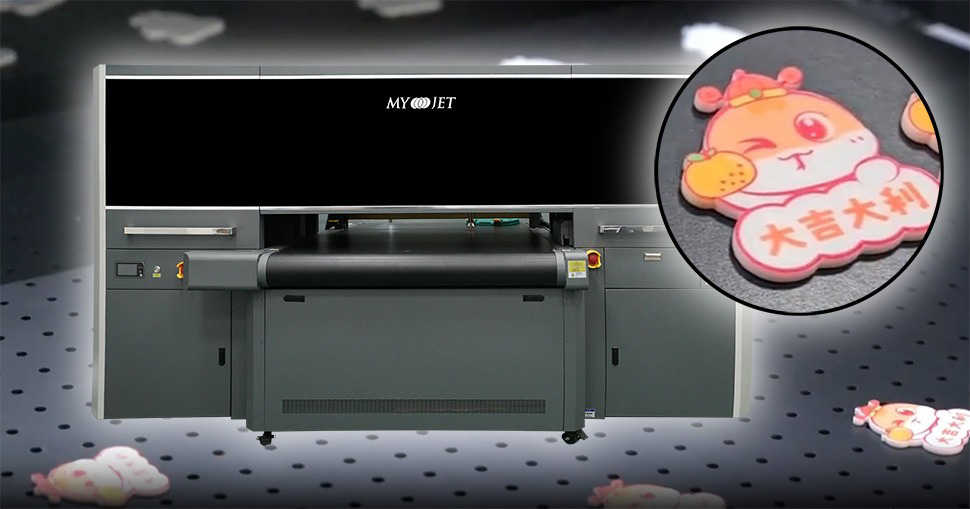
At this year’s APPPEXPO (at the NECC in Shanghai from 4–7 March), MYJET is set to spotlight a conveyorised UV platform that tackles one of the more persistent bottlenecks in industrial digital print: accurate registration on irregular items without the need for pin guides, manual alignment or time-consuming setup.
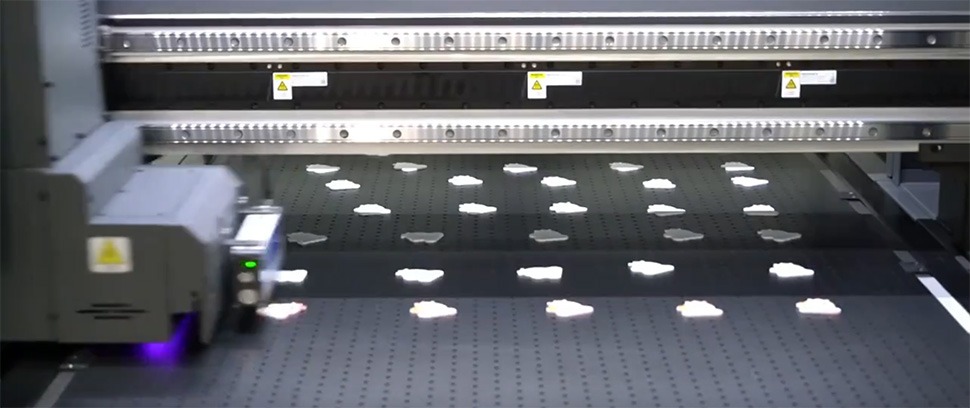
The company’s CCD120 UV printer, with its visual positioning conveyor, centres on an integrated camera-driven workflow designed to identify, locate and print onto objects placed randomly on the belt — a capability that could prove particularly relevant for PSPs and manufacturers handling high-mix, short-run production.
Vision system replaces manual setup
In conventional workflows, printing onto non-standard shapes typically requires operators to position parts precisely or invest in bespoke jigs to ensure repeatable placement. This adds labour, reduces flexibility and can lead to increased spoilage when product variations are introduced.
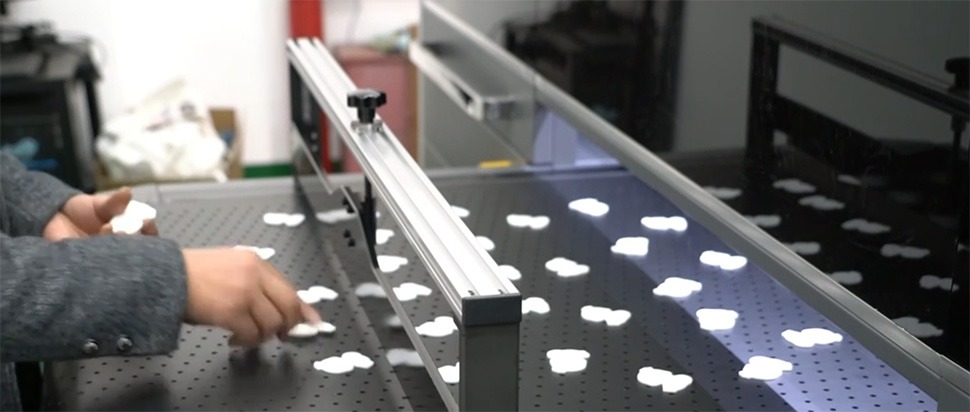
The CCD120 takes a different approach. Using a high-resolution camera system with dedicated lighting, the machine scans the conveyor in real time, recognises each item’s outline and automatically calculates print coordinates before imaging begins. The result is a process in which parts can simply be placed on the belt in arbitrary positions, with the system handling registration autonomously.
For production environments, this effectively removes the need for moulds or frames, allowing operators to switch between jobs — or even run mixed batches — without mechanical changeover.
Printing mixed shapes on the fly
According to the manufacturer, the workflow is capable of distinguishing between multiple product geometries within the same run and applying different print files accordingly. This opens the door to true mixed-SKU production, where several product types can be processed together rather than sequentially.
Such an approach aligns with growing demand for mass customisation, particularly in sectors such as promotional goods, industrial components and consumer products, where batch sizes are shrinking but variation is increasing.
Integrated workflow and production focus
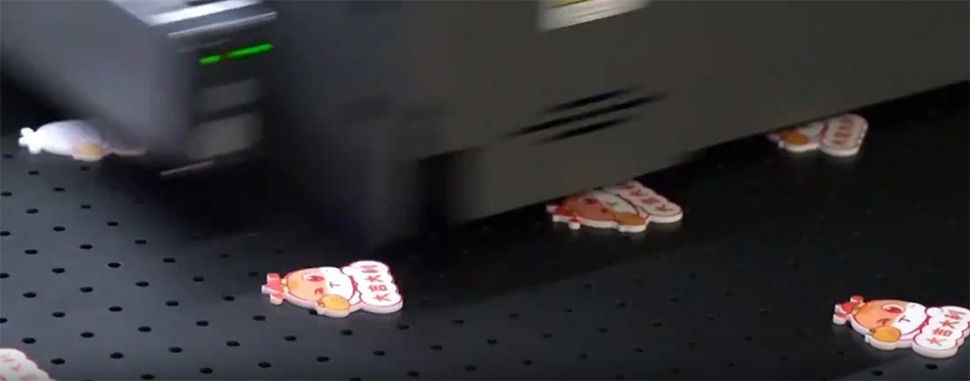
MYJET positions the CCD120 as a single-step system combining RIP, vision alignment and print control within one interface, aimed at reducing operator intervention. Simultaneous scanning and printing are intended to support continuous operation, while the conveyor platform and drive system are engineered for stability over extended runs.
From a buyer’s perspective, the key proposition lies less in headline speed and more in process efficiency — specifically, the ability to maintain throughput without the hidden costs of setup, tooling and manual handling.
A shift towards software-defined registration
The broader significance of camera-guided printing is the move away from mechanical precision towards software-defined accuracy. By letting machine vision determine position dynamically, print providers gain the flexibility to handle irregular substrates, variable batches and on-demand workflows with fewer constraints.
If the technology performs as described, it could represent a meaningful step forward for operations where the economics of jigging have long limited productivity.
MYJET will be demonstrating the system at APPPEXPO at the NECC in Shanghai from 4–7 March. You will find MYJET in Hall 5.2, stand C1756, where visitors can see the CCD120 in action, and discuss production requirements and application scenarios with the team.