In nature, every apex predator owns specific territory. An orca doesn’t dominate the entire ocean, it rules the waters it hunts in, whether that’s coastlines, migration routes, or feeding grounds. These are where an orca’s speed, intelligence and coordination give it an unassailable advantage. Its success is a matter not just of power, but of knowing exactly where that power counts.
The same logic applies to digital printing in folding carton. A common mistake that converters make when evaluating digital is to frame it as a wholesale replacement for offset, or that the technologies are competing across every job on the floor. It isn’t, and it doesn’t need to be. Digital’s advantage is decisive in specific territories, and those territories are precisely where the folding carton market is now heading. Understanding where digital hunts best is vital to capturing the value it offers.
Shorter runs are reshaping folding carton production
The folding carton industry was built on volume. Offset economics reward scale, and for decades the work rewarded offset in return. At the heart were long runs, stable designs, and predictable reorders. That environment is changing structurally.
Brand owners are managing far more SKU variations than they were a decade ago, driven by retail personalisation, seasonal and promotional ranges, e-commerce formats, and regulatory demands in sectors such as pharmaceuticals and food. As a result, run lengths are falling while the number of individual jobs climbs. Digital’s share of packaging print is forecast to keep growing, not because offset is failing, but because the job mix is moving toward work that offset handles with increasing difficulty.
Independent analysis from Keypoint Intelligence points the same way. Labour pressures and the rising cost of short-run offset work are actively accelerating the shift toward digital platforms. The territory where digital holds the advantage is not static, but widening.
Four opportunities for digital in folding carton
When we consider where digital printing could have the biggest impact in folding carton, four territories stand out.
The first is short-run and high-frequency reorders. Test SKUs, limited editions, regional launches and seasonal ranges all share a profile that can punish offset, such as low volume, high frequency, and little tolerance for make-ready waste. Digital carries almost no set-up penalty, so the job that erodes margin on a conventional press can earn it on a digital one.
The second is versioning and variable data. Where a single design fragments into dozens of language variants, regional artworks or promotional versions, digital’s plateless, changeover-free workflow turns a scheduling headache into a routine run. In pharmaceutical and regulated food packaging, the ability to serialise, code and vary at production speed is fast becoming a critical advantage.
Thirdly, we have speed-to-shelf and reactive work. Product launches, promotional campaigns and urgent reorders live or die by lead time. With no plates to produce and minimal set-up, a digital job can move from artwork sign-off to production in hours rather than days. The converter who can turn an urgent reorder around in 24 to 48 hours is offering a service very few operations can match.
Finally, there’s on-demand, inventory-light production. Minimum order quantities can easily force brand owners to over-produce, carrying inventory that may never reach the shelf if a design changes or demand shifts. Every discarded carton is wasted substrate, ink, energy and transport. Digital’s ability to produce closer to real demand removes that structural waste.
Digital cuts costs, waste and production times
In today’s folding carton market, digital’s advantages add up very quickly. Removing plates and make-ready doesn’t just cut cost and time, it changes what work is commercially viable for a printer. Production is saleable from the very first sheet, changeovers are instant, and variable data is native, rather than bolted on with additional machinery or passed on to another supplier. These are the exact capabilities the short-run, fast-turnaround niche demands, and they are central to digital printing technology.
Sustainability adds further strength to the case. Research by RR Donnelley found that 94% of packaging professionals now regard sustainability as a key factor in packaging decisions, with two-thirds having already shifted to more sustainability-focused designs and materials. Digital’s waste reduction and on-demand model speak directly to that pressure as quantifiable data that a converter can hand to a brand customer.
Digital and offset each have a role
None of this is an argument for abandoning offset. The long-run demands still belong to conventional production, and the smartest converters are running a hybrid operation. Each job is routed to the press best suited to produce it. Directing short and medium runs to digital frees offset capacity for the high-volume work where it excels, lifting the utilisation of both.
But hybrid is not stuck in a holding pattern. The short-run territory is expanding, brand owners are actively sorting their supply base by who can serve it, and the converters learning to hunt this ground now will hold it as it grows. Those converters who delay will find the best feeding grounds already occupied.
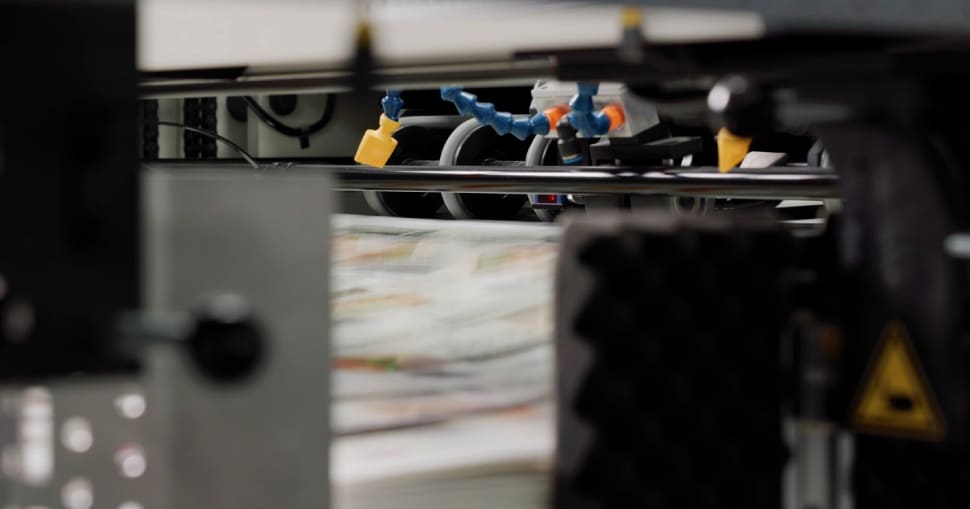
Agfa’s SpeedSet Orca was built for exactly these waters. It’s a single-pass, water-based B1 inkjet press running at up to 11,000 sheets per hour, with the substrate range and offset-grade quality to capture the full breadth of short-run folding carton work. It is not designed to replace the ecosystem, but to dominate the part of it that is growing fastest.
The opportunity is not to digitise everything. It is to identify the short-run, high-mix, fast-turnaround work already moving through the business and give it a press built to produce it profitably. That is where the major opportunity is, and that is where it will keep growing.